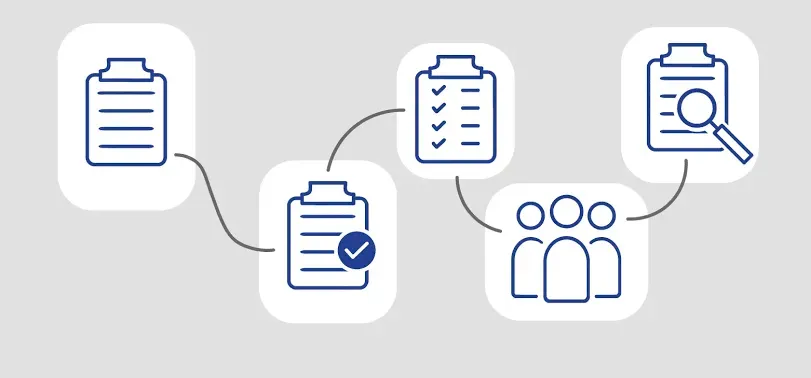
There is a kind of quiet scepticism surrounding the word 'audit'. As if it is by definition bureaucratic — paper-stacking, after-the-fact, a ritual that doesn't truly help anyone but simply has to be done. Tell someone at a birthday party that you're an auditor, and you'll get polite nods. Maybe a joke about spreadsheets.
But when you're in the thick of it every day — as we are — you see something very different. Audit works. Not always perfectly, not at the same level in every organisation, but as a mechanism? It is one of the most effective control measures the modern economy has.
Why does audit actually work?
Audit works for a deceptively simple reason: it provides an independent perspective. Within every organisation there are pressures — to hit targets, to tell a good story, to avoid difficult questions. An auditor has no such loyalty. They owe nobody anything except an accurate finding.
That independence is the engine behind audit's effectiveness. Not the procedures, not the work programmes, not the engagement letters. It is the fact that someone is looking who has not already decided on the outcome before walking through the door.
The deterrent value is chronically underestimated
What most people don't realise: audits start working before a single work programme has even been opened. The knowledge that someone is going to look — critically, methodically, without loyalty to internal narratives — means processes tend to be in better shape beforehand.
Organisations that know they are reviewed annually behave differently. They build better internal controls. They document decisions. They keep their files up to date. That is not naive optimism — it is an empirical pattern that every experienced auditor recognises.
The check that wasn't needed, because everyone knew it was coming. That is the quiet gain of audit that never appears in a report.
Internal audit: not controlling, but improving
External audit is primarily about verification: does what is stated hold up? Internal audit is about something else. A strong internal audit function signals operational risk before it becomes operational crisis. Less focused on catching what is wrong, more on building what can be better.
That shift in framing also makes the work more sustainably attractive for many auditors. You are not a police officer. You are an improvement partner. Organisations that understand this position internal audit differently — closer to the boardroom table, involved earlier in processes, with greater influence on the direction of travel.
What sets good auditors apart
Audit is not a checklist profession. Technical knowledge is the entry ticket, but the real difference lies elsewhere: the professional courage to name what you have actually found, even when that is uncomfortable. The willingness to ask the right question — "why does this process work this way?" — without shying away from an obvious answer.
The best auditors we know combine technical sharpness with intellectual honesty. They know when a finding is a finding, and when there is only uncertainty. They communicate the difference. That sounds simple. In practice, it is rare.
What the job market says
Demand for auditors — both external and internal — remains structurally high. Organisations recognise that good audit is not merely a compliance obligation but also a competitive advantage. Those who spot risks earlier can act sooner. Those who trust their numbers can decide faster.
You can see this reflected in how the role is positioned: less cost centre, more strategic partner. And in the salaries that go with it. The market recognises the value of audit in a way that would have been unthinkable ten years ago.
On the days when the piles are high and the feedback loops feel endless: the work you do truly matters.